NGC 6543 – Cat’s Eye Nebula

The Cat’s Eye Nebula (NGC 6543) in Draco is a classic target, but it’s notorious for a very simple reason: the sheer dynamic range between its blazing core and its whisper-faint outer halo is brutal to pull off. Sitting about 3,300 light-years away, this dying star didn’t just puff off a clean bubble of gas; it left behind concentric shells, high-speed jets, and intricate knotty structures as its central core evolved into a white dwarf.

What makes NGC 6543 such an interesting target to shoot and process is that balance of light and detail. The inner core shines bright in ionized oxygen ([O III]) and hydrogen (Hα), making it easy to blow out in standard exposures. To pull out the intricate details without turning the center into a featureless white blob, you’re almost forced into a lucky-imaging or HDR approach using very short exposures. But if you want that massive, faint outer halo that was blown off thousands of years earlier, you need heavy narrowband integration and some serious stretch work.

(more…)
Comments Off on NGC 6543 – Cat’s Eye Nebula

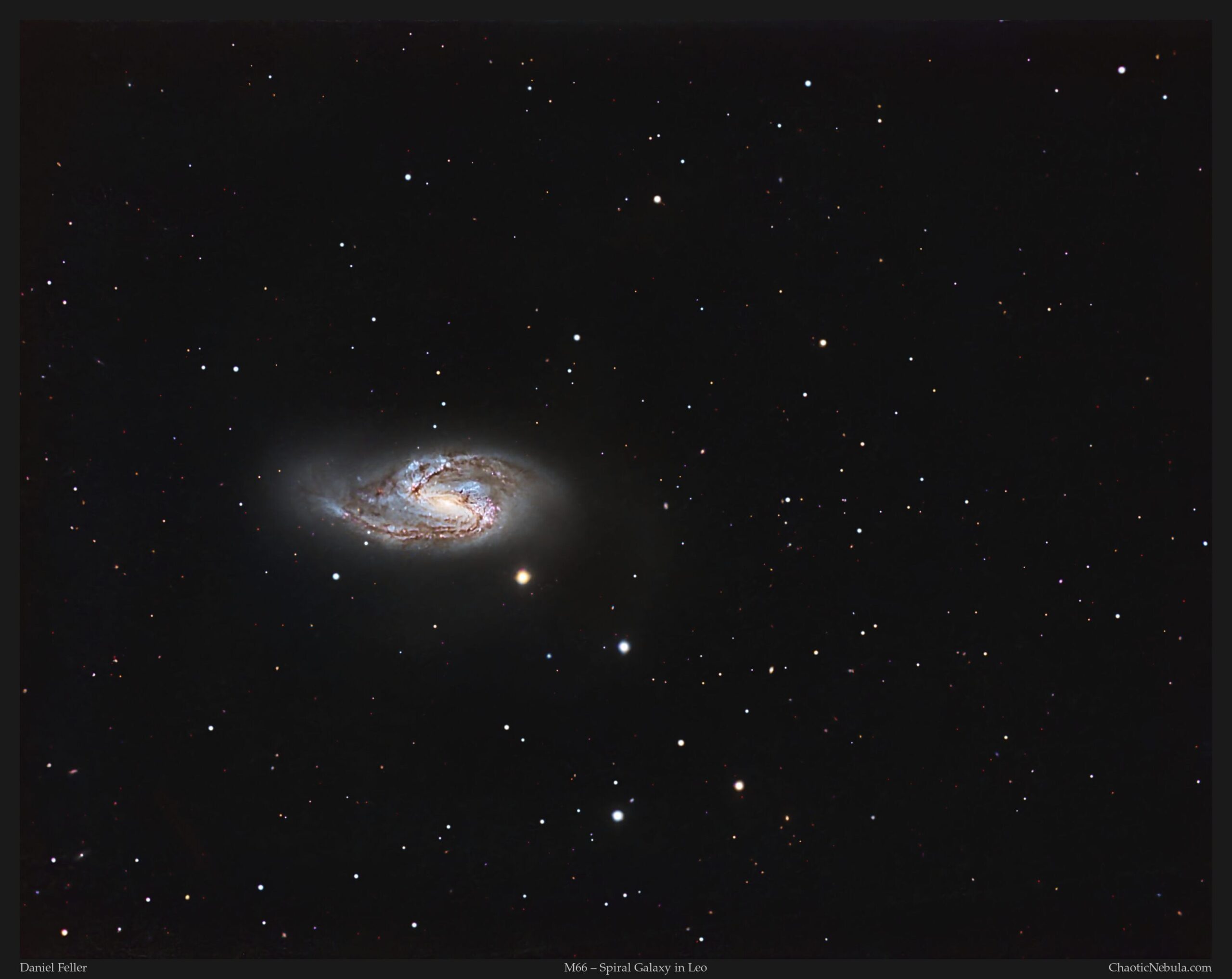
M66 – An intermediate spiral galaxy in Leo

Messier 66 (M66), also known as NGC 3627, serves as the vibrant and slightly more chaotic counterpart to M65 within the Leo Triplet. Located roughly 36 million light-years away in the constellation Leo, M66 is the largest and most luminous member of this famous trio. While M65 is celebrated for its symmetry, M66 is favored by astrophotographers for its asymmetric spiral arms and intense regions of star formation, which create a dynamic and colorful target for deep-sky imaging.

(more…)

Comments Off on M66 – An intermediate spiral galaxy in Leo

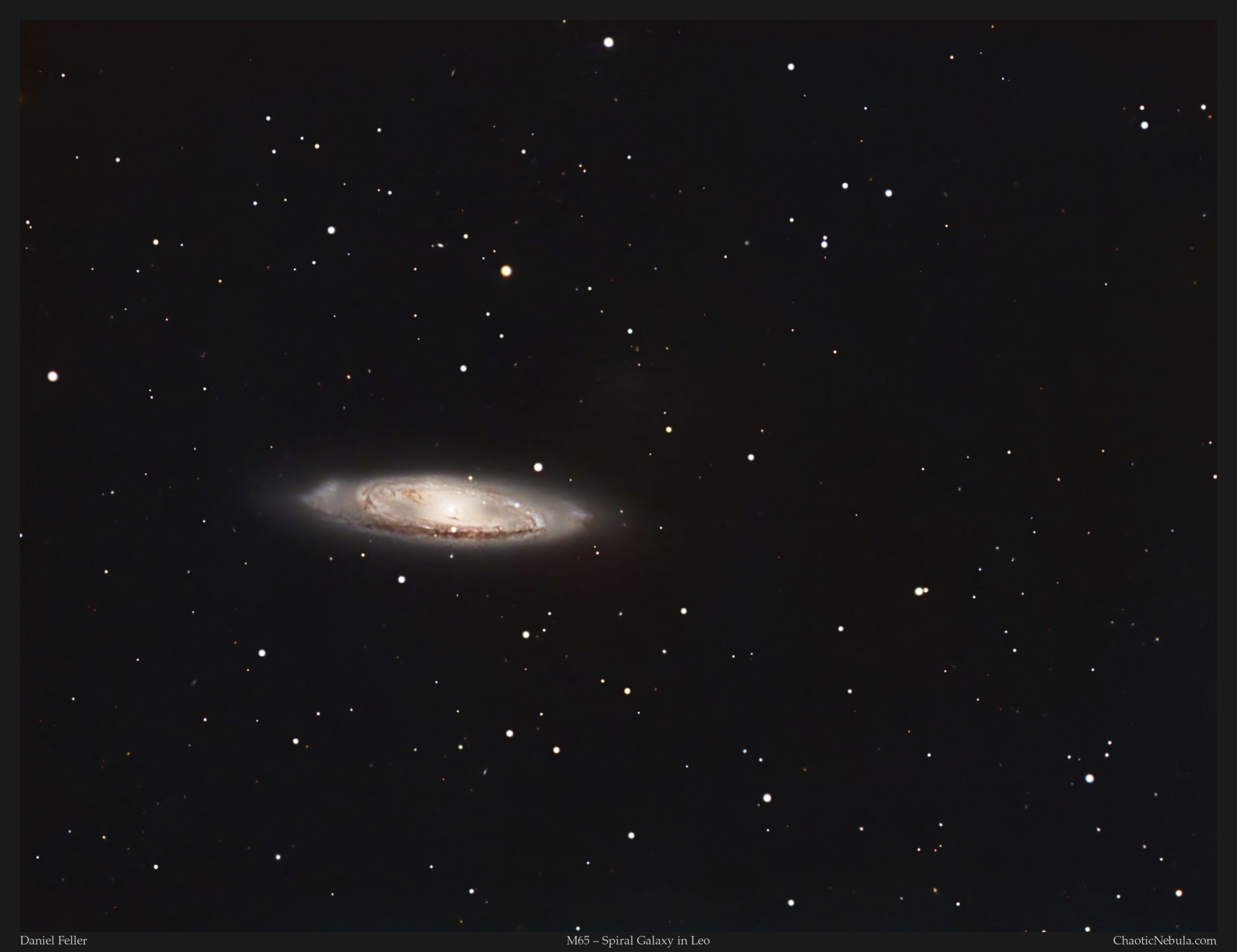
M65 – An intermediate spiral galaxy in Leo

Messier 65 (M65), also cataloged as NGC 3623, is a striking intermediate spiral galaxy located approximately 35 million light-years away in the constellation Leo. As a prominent member of the famous Leo Triplet, M65 sits in a gravity-bound neighborhood alongside M66 and NGC 3628. Spanning roughly 100,000 light-years in diameter, its high inclination relative to Earth provides astrophotographers with a stunning, nearly edge-on perspective of its tightly wound structure.

(more…)

Comments Off on M65 – An intermediate spiral galaxy in Leo

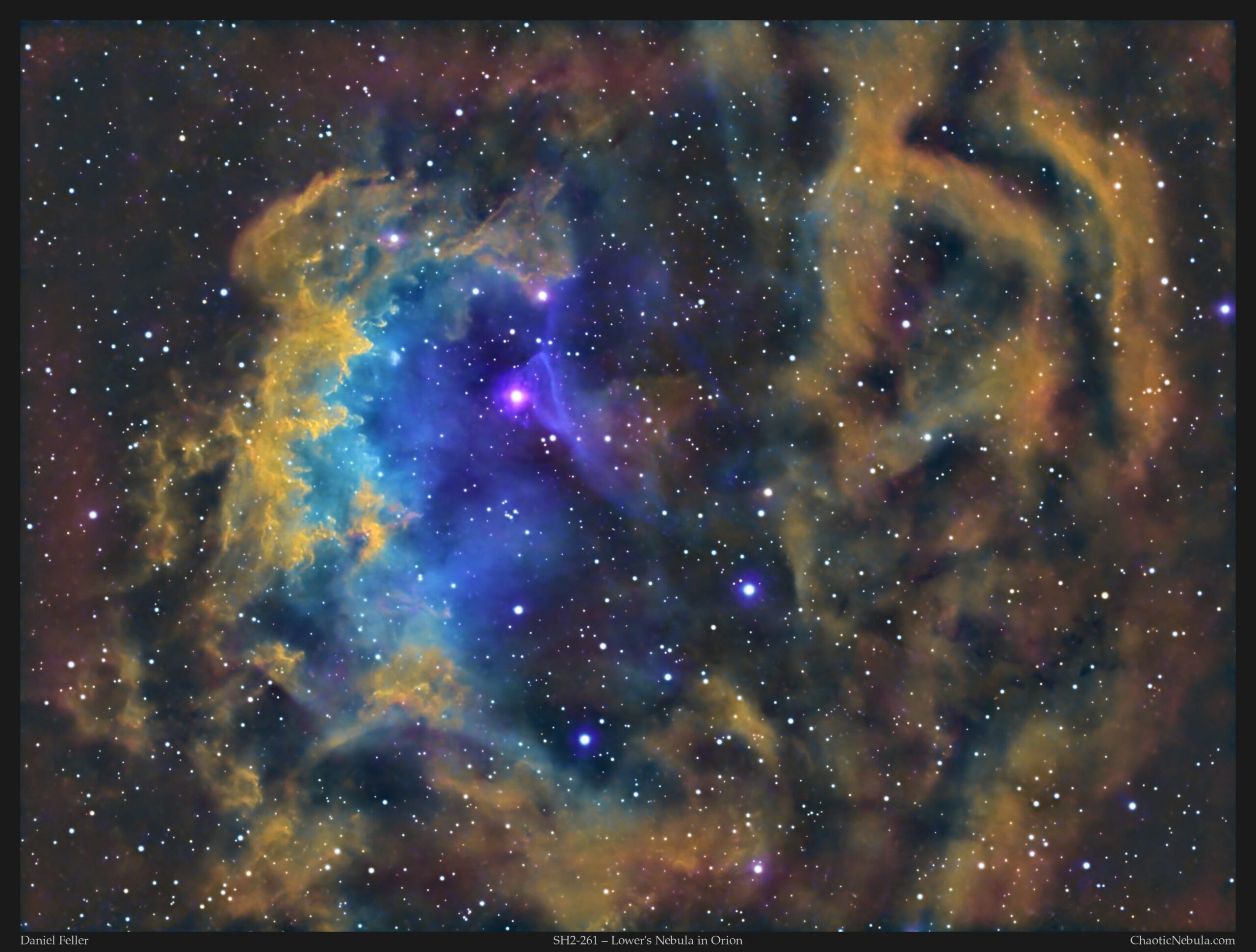
Sh2-261 – Lower’s Nebula in Orion

Sh2-261, widely known as Lower’s Nebula, is a faint and expansive emission nebula situated approximately 3,300 light-years away in the constellation Orion. Tucked away in the northernmost reaches of the Hunter, near the border of Gemini, this ionized hydrogen cloud offers a more subtle and sophisticated target than its famous neighbor, the Great Orion Nebula.

The nebula glows with a characteristic deep red hue, fueled by the intense ultraviolet radiation from the massive, hot blue star HD 41997. This O-type star acts as the primary engine for the region, exciting the surrounding hydrogen gas and causing it to fluoresce. Unlike many dense, compact nebulae, Sh2-261 is characterized by its delicate, wispy structures and a central “void” or darker region that gives it a distinctive, eye-like appearance—earning it the nickname the “Eye of Ra.”

(more…)

0 Comments